

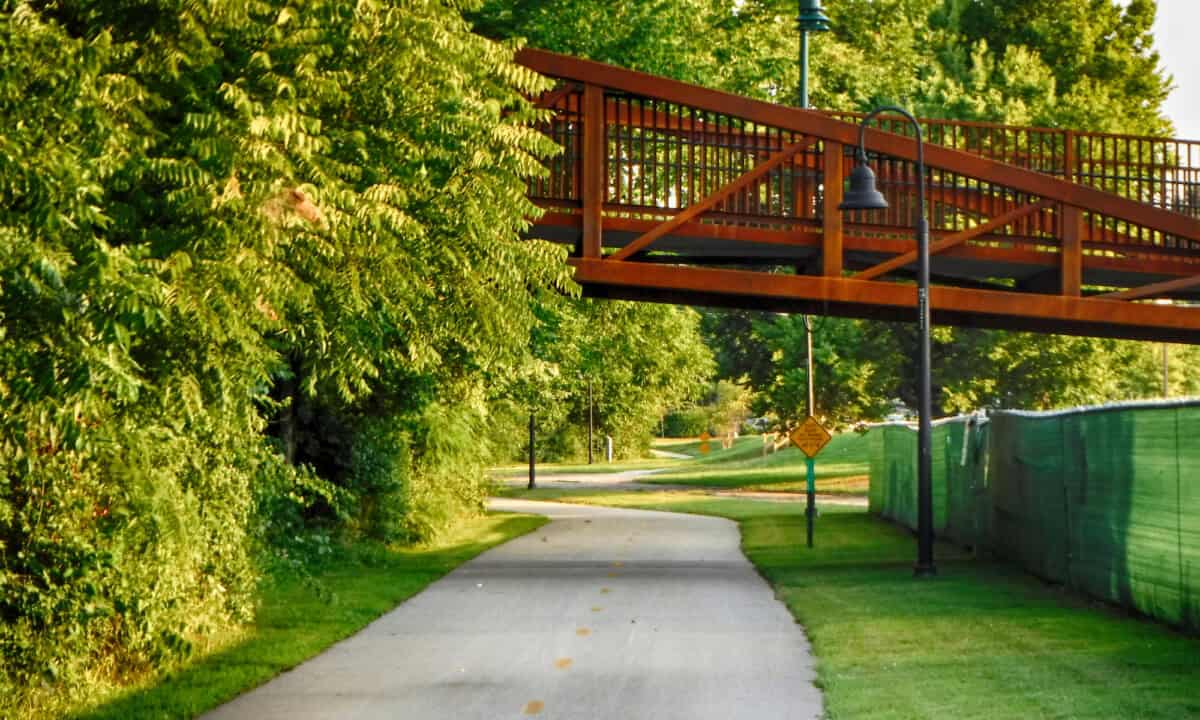
17 Million for Pathways in Northwest Arkansas

Hi — I’m Philip Shepard, founder of All Things Northwest Arkansas and a local real estate agent. Big news: Northwest Arkansas just landed roughly $17 million to expand and improve our trail and paved-pathway network. In this post I’ll break down where that money is going, why this matters for the region, and why the year 2050 keeps coming up when people talk about planning here.
Why pathways matter in Northwest Arkansas
If you’re new to the area, trails and paved pathways might seem like a luxury. They’re not. Northwest Arkansas has made investing in active transportation a core part of its growth. Right now we’re talking about roughly 450–500 bikable miles across the region — everything from mountain-bike singletrack to multi-use paved routes like the Razorback Greenway.
- Trails are multimodal. People use them for mountain biking, road biking, running, walking, scooters, even one-wheels.
- They improve quality of life and community health. You can bike to coffee shops, work, parks, and downtowns instead of relying on a car for every trip.
- They attract people and investment. Walkable, bikable places support restaurants, retail, housing, and higher property values.
- Our climate makes outdoor mobility usable many months of the year — a huge change if you’re coming from a place where biking is seasonal.
Where the $17M is being focused
Not every town received the same share of the funding. The big winners for this round are growth corridors that are ready to build and connect: Springdale, Lowell (and nearby Tontitown-style growth areas), and neighboring pockets around Highway 49. Bentonville, Fayetteville and Bella Vista also receive funding, but the largest chunk was dedicated to areas with fast development and flat ground that make new pathway construction straightforward.
Some smaller communities were included but received much smaller allocations. For example, Centerton is slated for roughly $100,000 plus another $400,000 for sidewalks — useful, but not transformational. That smaller allocation reflects where each city sits in its growth lifecycle: some places need to mature local plans and governance before major trail investments make sense.
Why Springdale and Lowell are getting the most attention
- They’re high-growth, close to Highway 49, and relatively easy to build through (flatter ground).
- Downtown revitalization, new retail, apartments, and restaurants are already happening — adding strong pathways accelerates walkability and connection.
- Connecting these growing downtowns to the Razorback Greenway and nearby businesses makes daily life easier for residents and visitors.
What to expect — timeline and immediate impacts
Plans are moving quickly. Construction and build-out in funded areas could start within the next 6–9 months, with phasing over the coming years. The aim is to stitch together neighborhoods, downtowns, and regional paths so people can get around without always needing a car.
- Improved connectivity to the Greenway and to commercial corridors (steakhouses, coffee shops, etc.).
- New sidewalks and paved multi-use paths that increase mobility and safety.
- More direct routes between residential areas and jobs, schools, parks, and shops.
Why 2050 keeps getting mentioned
Planners and civic leaders regularly reference 2050 because that’s the horizon they’re using to prepare the region for growth. Projections suggest Northwest Arkansas could reach around 1 million people by 2045–2050. Today we’re roughly in the 575–600k range.
“They are always thinking ahead — how can we make sure this area has the infrastructure, the accessibility, and the mobility it will need by the time a million people live here?”
That forward-thinking matters. Building trails and alternate mobility options now prevents the same kind of reactive, stop-gap construction you see in places that wait until congestion or safety becomes a crisis. When a community plans for 2050 today, it avoids endless retrofits later.
What this means if you live here or are thinking of moving here
For residents and people considering a move to Northwest Arkansas, this investment is a positive sign:
- Better everyday mobility — more options for commuting, errands, and recreation.
- Stronger neighborhoods — new pathways make downtowns more walkable and attractive to local businesses.
- Health and community benefits — safer spaces for kids, runners, and families.
- Long-term value — neighborhoods with good active-transportation access often see stronger real estate demand.
If you’re relocating here, I’ve put together some tools to make your move and visit easier: three-day itineraries tailored to different interests, instant home updates (so you don’t miss new listings), and the NWA Starter Pack — a 120-page guide with demographics, schools, and local highlights. I also send a weekly “What’s Going On in NWA” email that curates the best events and development news (yes, it might induce FOMO — in a good way).
Final thoughts
Investing $17 million into pathways is another signal that Northwest Arkansas plans to grow smart and stay livable. Springdale, Lowell, Bentonville, Fayetteville, Bella Vista, and neighboring communities all stand to benefit — especially where plans are already in motion.
If you want to explore the area, check out the three-day itineraries or request the NWA Starter Pack. If you’re actively looking for a home, sign up for instant home updates — it’s the fastest way to see new listings here. And if you want to talk through any of this in person, I’m happy to meet for coffee and show you why I chose to move here (hint: it wasn’t Chicago).
Contact: Philip Shepard — All Things Northwest Arkansas. For itineraries, starter packs, instant home updates, and weekly event emails, visit AllThingsNWA.com or reach out directly to discuss moving to NWA.
